
July 06, 2026 • 4 min reading
By UnfoldXR, Indrabati Sarkar / Lead - Brand Voice & Content (Consultant)
The biggest productivity drain in industrial operations is not always equipment failure or unplanned downtime. It is the time workers spend waiting instead of working.
Across industries, employees lose hours every week waiting for the right information or instructions, searching for information, switching between systems, coordinating tasks, and waiting for decisions. Collectively, this has come to be known as the 'Fifth Worker' phenomenon, where organisations effectively pay for five people but receive the productive output of only four.
When compounded, the amount of time lost between tasks burns a comet-sized hole in the revenues of every business that is not thinking about managing this lost time effectively.
Ironically, even as organisations have become more digital, work has remained as fragmented as ever. While enterprise systems store information efficiently, accessing it still remains a time-consuming task. A single maintenance activity today may require workers to move between an ERP, a CMMS, email, messaging platforms, documentation repositories, and approval workflows before the task can even begin.
The result is what researchers call "work about work": time spent coordinating work instead of executing it.
According to McKinsey & Company, employees spend an average of 1.8 hours every day gathering and searching for information. The American Productivity & Quality Center (APQC) found that knowledge workers spend nearly nine hours every week managing communication, looking for information, and sitting in unnecessary meetings. Additional time is lost navigating disconnected systems, recreating existing information, and identifying the right person to answer a question.
Modern workplaces may have replaced physical paperwork with digital systems, but processes remain complicated and repetitive. Each system collects multiple data points, but because they function in silos, critical insights are often unavailable when they are needed most. Workers are drowning in data that is continuously being collected by these systems.
Research published in Nature estimates that information overload costs organisations globally nearly $1 trillion every year through lost productivity, slower decision-making, and cognitive overload.
Access to the right information at the right moment has become a bigger challenge than access to information itself. Organisations are increasingly investing in a self service knowledge base that enables frontline teams to access critical information independently instead of relying on emails, calls, or delayed expert support. However, simply storing knowledge is no longer enough. The bigger question today is how does AI enhance traditional knowledge management system capabilities by making information contextual, searchable, and available at the moment of work.
A technician waiting for an expert to confirm a diagnosis. An engineer searching for the latest maintenance procedure. An inspector pausing work until documentation is verified. A field worker waiting for approvals before proceeding. These are all examples of waiting, and for frontline industries, these delays are critical.
While individually these delays may not seem significant, across thousands of work orders, maintenance activities, and inspections, they become one of the largest hidden sources of operational inefficiency.
According to Deloitte, unplanned downtime costs industrial businesses up to $50 billion annually. While this is often attributed to equipment failures, the delays associated with identifying problems, accessing information, coordinating people, and making decisions are what extend these downtimes and contribute to the loss of billions of dollars.
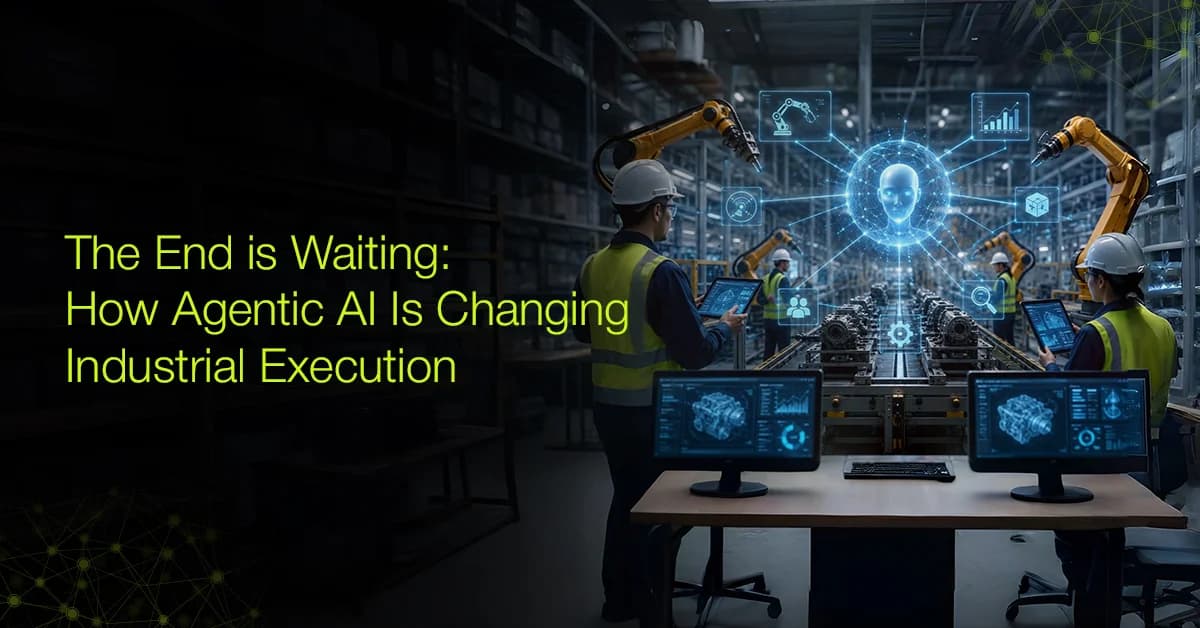
For years, enterprise AI focused on analysing operations after work was completed. Today, AI is moving closer to execution, bringing contextual information directly into the flow of work. Guided workflows, real-time diagnostics, remote expert collaboration, and agentic AI reduce the time spent searching, waiting, and escalating issues.
Knowledge becomes available to the employees making on-ground decisions rather than remaining locked inside enterprise systems. Combined with AI knowledge management, organisations can make expertise instantly accessible instead of leaving it scattered across documents, systems, and individual experts.
This is where UnfoldXR is changing how frontline operations are executed. At the centre is AVA, UnfoldXR's agentic AI layer that supports workers before, during, and after every task.
Instead of searching across systems or waiting for expert input, workers receive contextual guidance, relevant documentation, diagnostics, and remote assistance at the moment they need it. Trained to your operational context, AVA helps teams make faster decisions while executing with confidence.
Deployed across mobile devices, tablets, wearables, and smart glasses, UnfoldXR makes operational knowledge instantly accessible without disrupting existing workflows.
To know more about our services, visit www.unfoldxr.com or write to us at info@unfoldxr.com.