
UnfoldXR · April 16, 2026 · 9 min read
For years, augmented reality has been largely associated with gaming and entertainment. From immersive experiences to interactive filters, its adoption has been driven by engagement rather than execution.
That is changing.
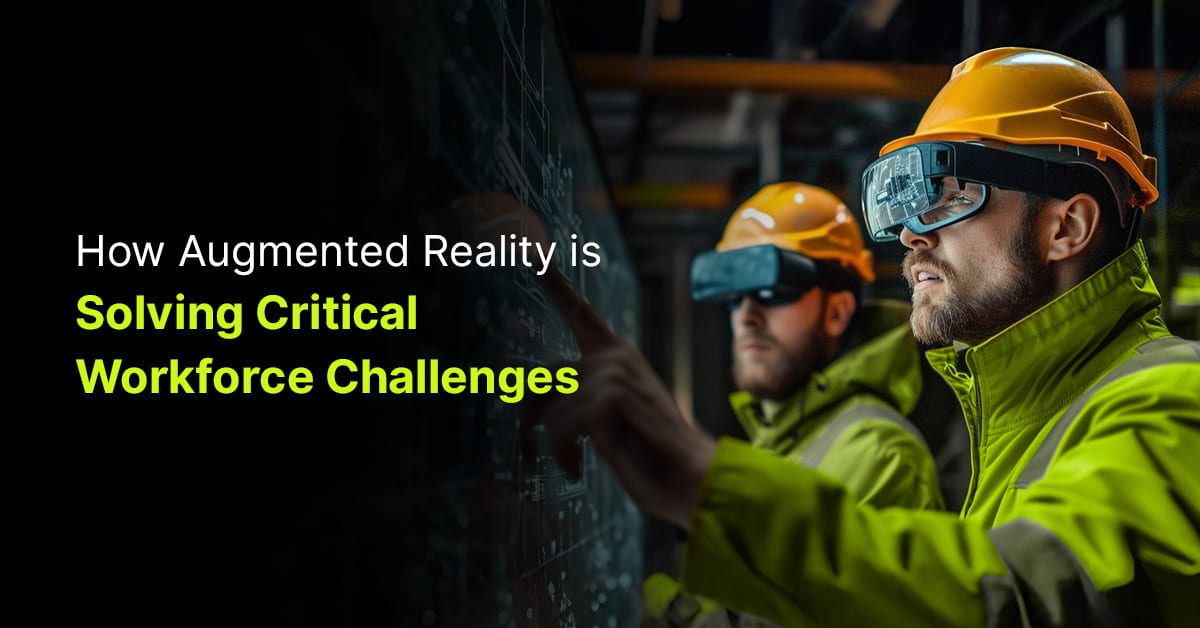
As industries face increasing pressure to improve productivity, reduce errors, and manage distributed workforces, augmented reality is moving into a far more practical role. It is becoming a tool for getting work done.
While a surge in AR adaptation was seen in some industries like retail and healthcare during the COVID-19 pandemic phase, the overall adoption has started gathering momentum as reported by Fortune Business Insights.
“The global augmented reality (AR) market size was valued at USD 140.34 billion in 2025 and is projected to grow from USD 210.96 billion in 2026 to USD 2,344.90 billion by 2034, exhibiting a CAGR of 35.10% during the forecast period.”
— Fortune Business Insights
Driven by enterprise adoption across manufacturing, logistics, healthcare, and field service and advances in hardware, better ergonomics, and integration with enterprise systems — AR is now more accessible and scalable.
What has also changed is the cost and complexity of deploying AR. Earlier, creating immersive environments and workflows required significant time, effort, and specialised development. With the rise of generative AI, creating guided instructions, workflows, and digital environments has become faster and far more scalable.
At the same time, the cost of smart glasses and wearable devices is steadily coming down, while performance and usability continue to improve. This shift is critical in enabling organisations to move beyond pilots and deploy AR across larger frontline teams.
Alongside these technology shifts, industries are facing a growing challenge in the availability of skilled manpower. As experienced workers retire and operations scale, the gap between required skills and available talent continues to widen. In this context, the ability of the workforce to adopt and work alongside intelligent systems becomes essential to sustaining productivity.
AR brings training directly into the flow of work. Instead of learning in isolation, employees follow step-by-step instructions while performing actual tasks. This shortens the learning curve and enables faster time to productivity. A new technician on the shopfloor can execute a maintenance task by following guided instructions on a device, reducing the need for prolonged classroom training. For organizations, this means faster onboarding and less dependency on constant supervision.
Traditional training relies heavily on static manuals or one-time sessions. Retention in such formats is often low. AR changes this by enabling hands-on, visual learning. When employees perform tasks with guided assistance, they retain processes more effectively. A worker assembling a component while following visual overlays is more likely to remember the sequence compared to reading it from a document. Over time, this leads to stronger skill development and fewer repeated errors.
Industries are facing a growing gap as experienced workers retire and new hires enter the workforce with limited hands-on exposure. AR captures expert knowledge and translates it into guided workflows that others can follow. This reduces dependency on a few experienced individuals and enables consistent execution across teams. A junior technician can perform a complex repair by following a structured workflow created from expert processes. This ensures that knowledge is not lost and remains accessible at scale.
Errors in execution often lead to rework, repeat visits, and increased operational costs. AR reduces guesswork by guiding workers through each step of a task. This improves accuracy and ensures that issues are resolved correctly the first time. A field technician diagnosing equipment can follow a guided troubleshooting path, reducing the chances of misdiagnosis and improving first-time fix rates.
Access to experts is often limited, especially in distributed operations. AR enables remote collaboration by allowing experts to see what the worker sees and guide them visually in real time. This reduces the need for physical presence and speeds up resolution. A technician facing a complex issue can connect with an expert who provides visual guidance, helping resolve the problem without waiting for on-site support.
A significant amount of time is lost in searching for information across manuals, systems, and teams. AR replaces static documentation with interactive, visual instructions available during task execution. This reduces downtime between steps and improves overall efficiency. Workers can access the exact information they need, when they need it, without leaving the work environment.
In industries such as manufacturing, oil and gas, and utilities, safety is critical. AR enables hands-free access to instructions, allowing workers to stay focused on their environment. This reduces distractions and minimizes the risk of errors. A technician working in a hazardous area can follow guided instructions without handling physical documents or devices, improving both safety and accuracy.
Data is often available but not accessible at the moment of work. AR integrates with enterprise systems to bring relevant information directly into the user's field of view. This supports faster diagnostics and better decision-making. A technician inspecting a machine can view performance data and maintenance history instantly, enabling quicker and more informed actions.
Augmented reality is no longer a future concept. It is becoming a practical layer in everyday operations. Platforms like UnfoldXR are enabling this shift by combining AR with structured workflows, real-time guidance, and seamless integration into existing systems. The focus is not just on visualisation, but on execution.
This shift reflects a broader change in how organisations approach workforce capability. As highlighted in Deloitte's 2026 Global Human Capital Trends report:
“AI is reshaping both, enabling workers to learn, adapt, and apply new skills directly in the flow of work. Organizations that build this always-on, real-time adaptability can avoid stalled transformations and disengaged talent, turning workforce growth and responsiveness into a new competitive advantage.”
— Deloitte 2026 Global Human Capital Trends
As organisations look to scale operations with limited skilled manpower, the focus is shifting from standalone tools to systems that support people directly during work. The combination of AR, AI-driven content creation, and evolving wearable hardware is making this transition both practical and necessary.
To know more about how UnfoldXR brings augmented reality into the moment of work, talk to an expert.